Indonesia is home to more active volcanoes than any other country on Earth — more than 120 of them rise from jungles, islands, and mountain ranges across the archipelago. These volcanoes shape Indonesia’s landscapes, culture, and mythology, creating some of the most dramatic hiking experiences in the world. From glowing blue flames in East Java to towering summits in Lombok and mist‑covered craters in Bali, Indonesia offers volcano hikes for every type of traveler.This guide breaks down the best volcano hikes in Indonesia, complete with difficulty levels, route details, safety notes, elevation profiles, and insider tips to help you plan an unforgettable adventure.
Table of Contents
ToggleWhy Indonesia Is the Best Volcano‑Hiking Destination in the World
Indonesia’s volcanoes offer a rare combination of accessibility, diversity, and dramatic scenery.
1. Unmatched Geological Diversity
Indonesia features:
- Stratovolcanoes
- Caldera lakes
- Lava fields
- Sulfur vents
- Active craters
2. Accessible Volcano Trails
Many volcanoes offer:
- Well‑marked trails
- Local guides
- Sunrise treks
- Jeep access to upper slopes
3. Dramatic Landscapes
Expect:
- Crater rims
- Lava domes
- Misty jungles
- Alpine meadows
- Moon‑like terrain
4. Cultural Significance
Volcanoes are deeply tied to:
- Balinese Hindu rituals
- Javanese mythology
- Local legends
- Ancient temples
5. Year‑Round Hiking
Indonesia’s tropical climate allows volcano trekking in:
- Dry season (best)
- Shoulder season
- Select wet‑season windows
The 12 Best Volcano Hikes in Indonesia
Below are the top volcano hikes, each with detailed route notes, difficulty levels, elevation, and insider tips.
1. Mount Bromo (East Java)
Elevation: 2,329 m Difficulty: Easy Best For: Sunrise views, beginners
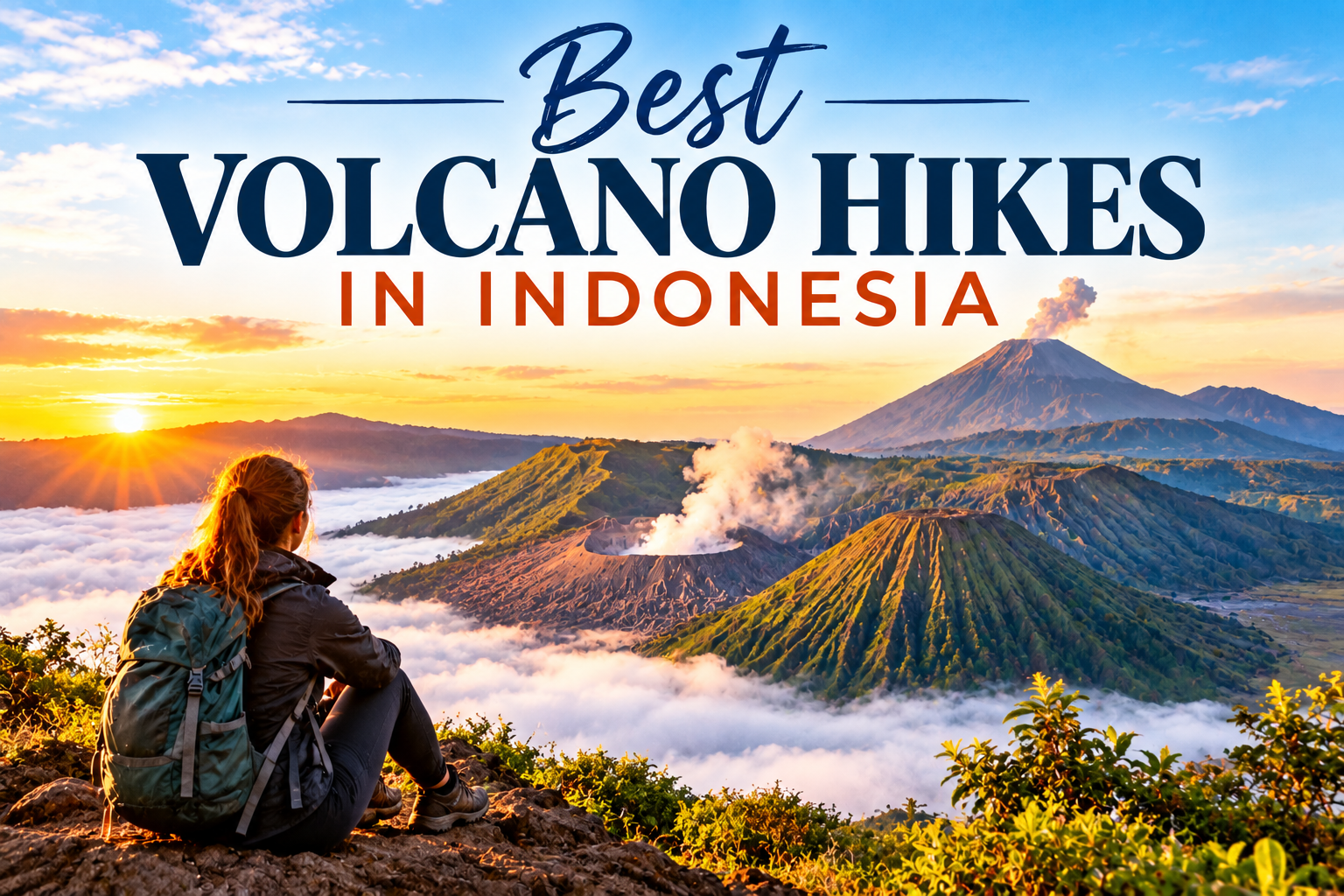
Mount Bromo is Indonesia’s most iconic volcano — a surreal landscape of ash plains, smoking craters, and golden sunrise views.
Why It’s Amazing
- Easy hike suitable for all levels
- Jeep access to viewpoints
- Dramatic volcanic desert
- Active crater you can walk to
Route Overview
Cemoro Lawang → Sea of Sand → Bromo Crater Rim
Highlights
- Penanjakan sunrise viewpoint
- Sea of Sand
- Bromo crater stairs
Insider Tips
- Sunrise is essential
- Wear a mask — sulfur fumes can be strong
- Weekdays are quieter
2. Mount Ijen (East Java)
Elevation: 2,799 m Difficulty: Moderate Best For: Blue flames, sulfur crater lake
Mount Ijen is famous for its electric‑blue flames — a rare natural phenomenon caused by burning sulfur gas.
Why It’s Amazing
- Blue flames visible before sunrise
- Turquoise acid crater lake
- Sulfur miners carrying heavy loads
Route Overview
Paltuding → Summit trail → Crater rim → Blue flame descent (guided)
Highlights
- Blue flames
- Crater lake
- Sunrise over the rim
Insider Tips
- Bring a gas mask
- Blue flames only visible at night
- Hire a certified guide
3. Mount Rinjani (Lombok)
Elevation: 3,726 m Difficulty: Hard Best For: Multi‑day trekking, crater lake
Mount Rinjani is Indonesia’s second‑highest volcano and one of the most challenging hikes in Southeast Asia.
Why It’s Amazing
- Multi‑day adventure
- Segara Anak crater lake
- Dramatic summit ridge
- Volcanic cone inside the caldera
Route Overview
Senaru or Sembalun → Crater rim → Segara Anak Lake → Summit
Highlights
- Summit sunrise
- Crater lake camping
- Hot springs
Insider Tips
- Only hike in dry season
- Requires good fitness
- Porters recommended
4. Mount Agung (Bali)
Elevation: 3,031 m Difficulty: Hard Best For: Spiritual significance, sunrise summit
Mount Agung is Bali’s holiest mountain — a sacred volcano central to Balinese Hinduism.
Why It’s Amazing
- Steep, challenging climb
- Sunrise above the clouds
- Views of Mount Rinjani on clear days
Route Overview
Pura Besakih route (long) or Pura Pasar Agung route (shorter)
Highlights
- Temple starting points
- Summit ridge
- Dramatic sunrise
Insider Tips
- Check volcanic activity status
- Start at midnight for sunrise
- Requires strong fitness
5. Mount Batur (Bali)
Elevation: 1,717 m Difficulty: Easy–Moderate Best For: Sunrise hike, beginners
Mount Batur is Bali’s most popular volcano hike — accessible, scenic, and perfect for sunrise.
Why It’s Amazing
- Short, rewarding hike
- Sunrise over Lake Batur
- Views of Agung and Rinjani
Route Overview
Toyabungkah → Summit trail → Sunrise viewpoint
Highlights
- Sunrise breakfast cooked on volcanic steam
- Lake Batur views
- Caldera rim
Insider Tips
- Go with a licensed guide
- Avoid weekends
- Bring a jacket — mornings are cold
6. Mount Merapi (Central Java)
Elevation: 2,930 m Difficulty: Hard Best For: Active volcano enthusiasts
Mount Merapi is one of the most active volcanoes in the world — a thrilling but regulated hike.
Why It’s Amazing
- Active lava dome
- Dramatic summit ridge
- Night hike for sunrise
Route Overview
Selo → Summit ridge → Observation zone
Highlights
- Lava dome views
- Sunrise over Central Java
- Volcanic rock formations
Insider Tips
- Only hike with certified guides
- Activity levels change frequently
- Night hike recommended
7. Mount Papandayan (West Java)
Elevation: 2,665 m Difficulty: Easy–Moderate Best For: Sulfur fields, steaming vents
Papandayan offers a surreal volcanic landscape with bubbling mud pools and steaming fumaroles.
Why It’s Amazing
- Easy access
- Unique sulfur fields
- Colorful volcanic terrain
Route Overview
Camp David → Hutan Mati → Crater zone
Highlights
- Dead forest
- Sulfur vents
- Crater valley
Insider Tips
- Great for beginners
- Avoid weekends
8. Mount Kelimutu (Flores)
Elevation: 1,639 m Difficulty: Easy Best For: Color‑changing crater lakes
Kelimutu is famous for its three crater lakes that change color throughout the year.
Why It’s Amazing
- Easy paved trail
- Sunrise viewpoints
- Unique volcanic chemistry
Route Overview
Parking area → Summit viewpoint → Lake overlooks
Highlights
- Three crater lakes
- Sunrise colors
- Smooth accessibility
Insider Tips
- Arrive before dawn
- Weather can shift quickly
9. Mount Sinabung (North Sumatra)
Elevation: 2,460 m Difficulty: Hard Best For: Viewing active eruptions (from safe zones)
Sinabung is highly active — hiking is restricted, but safe viewpoints offer dramatic volcanic activity.
Why It’s Amazing
- Frequent eruptions
- Ash plumes
- Dramatic photography
Insider Tips
- Follow official safety zones
- Do not attempt summit hikes
10. Mount Semeru (East Java)
Elevation: 3,676 m Difficulty: Very Hard Best For: Serious trekkers
Semeru is Java’s highest peak — a demanding multi‑day trek.
Why It’s Amazing
- Summit crater eruptions every 20–30 minutes
- Multi‑day adventure
- Views over Bromo Tengger caldera
Route Overview
Ranu Pane → Ranu Kumbolo → Kalimati → Summit
Highlights
- Ranu Kumbolo lake
- Summit eruptions
- High‑altitude terrain
Insider Tips
- Requires permits
- Only for experienced hikers
11. Mount Dieng Plateau (Central Java)
Elevation: 2,000+ m Difficulty: Easy Best For: Families, cultural volcano sites
Dieng Plateau offers accessible volcanic attractions with cultural significance.
Why It’s Amazing
- Easy walks
- Colorful crater lakes
- Ancient temples
Highlights
- Sikidang Crater
- Telaga Warna
- Arjuna Temple complex
12. Mount Tambora (Sumbawa)
Elevation: 2,850 m Difficulty: Hard Best For: History lovers, remote trekking
Tambora caused the “Year Without a Summer” in 1815 — one of the largest eruptions in history.
Why It’s Amazing
- Remote, untouched terrain
- Massive caldera
- Historical significance
Route Overview
Pancasila → Crater rim
Insider Tips
- Remote — requires planning
- Dry season only
Best Time of Year for Volcano Hiking in Indonesia
Dry Season (April–October)
Best weather Clear views Safer trails
Wet Season (November–March)
Slippery trails Foggy summits Limited access
Volcano Hiking Safety Tips
1. Check Activity Levels
Volcanoes can become active quickly.
2. Hire Local Guides
Essential for safety and navigation.
3. Bring Proper Gear
Headlamp Jacket Water Mask (for sulfur)
4. Start Early
Sunrise hikes are common.
5. Respect Local Customs
Many volcanoes are sacred.
Indonesia Offers the World’s Most Dramatic Volcano Hikes
Indonesia’s volcanoes deliver unforgettable adventure — from sunrise summits and crater lakes to sulfur vents and active eruptions. Whether you’re a beginner seeking an easy sunrise hike or an experienced trekker chasing multi‑day summits, Indonesia offers volcano experiences found nowhere else on Earth.
This guide gives you everything you need to plan the perfect volcano adventure — routes, highlights, timing, tips, and insider insights.