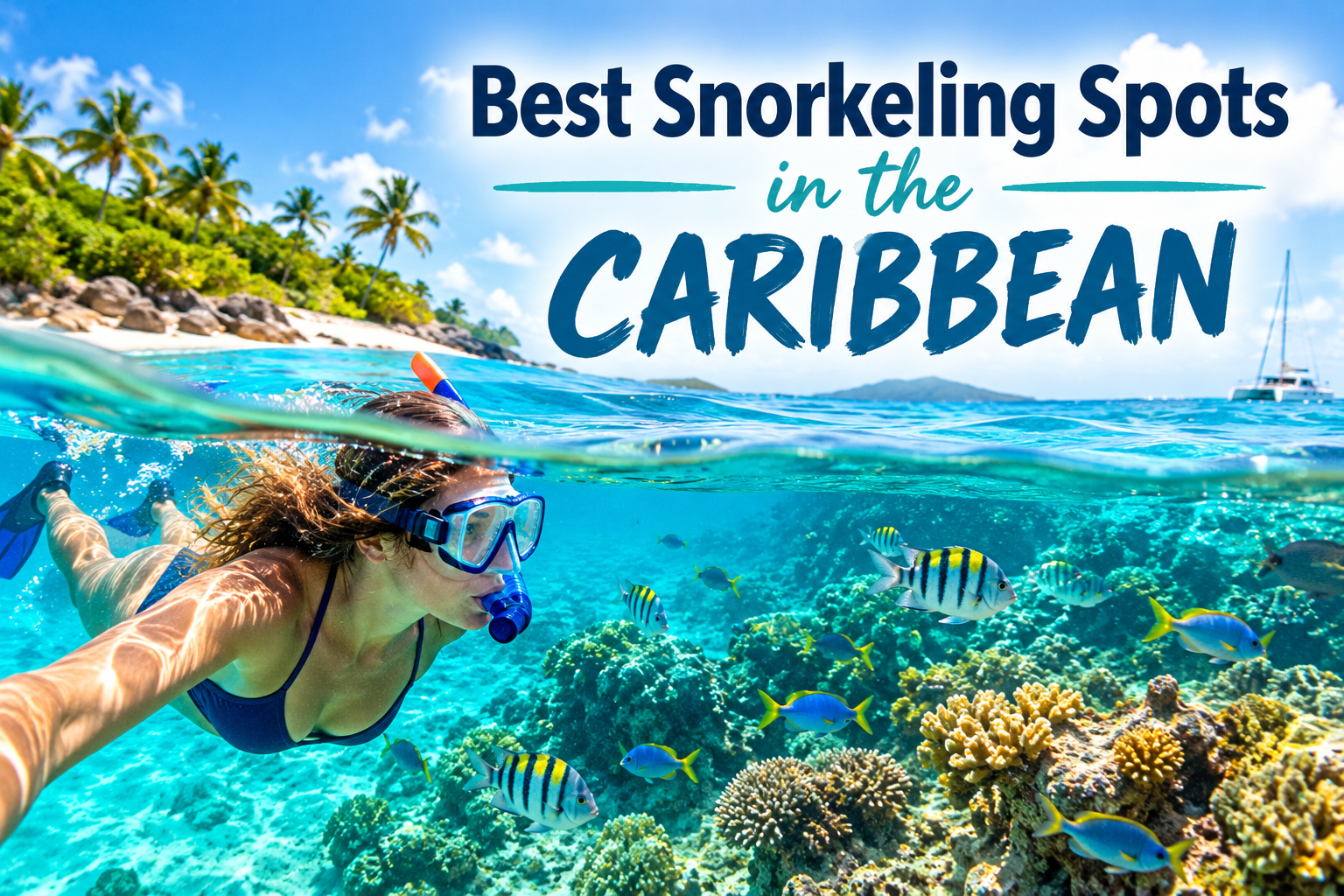
The Caribbean is one of the world’s top snorkeling destinations — a region defined by turquoise water, vibrant coral reefs, colorful fish, sea turtles, stingrays, underwater caves, and warm tropical weather year‑round. With hundreds of islands and thousands of reefs, the Caribbean offers snorkeling experiences for every type of traveler, from beginners to seasoned underwater explorers.
This guide breaks down the best snorkeling spots in the Caribbean, complete with island highlights, marine life details, accessibility notes, and insider tips to help you plan an unforgettable underwater adventure.
The Caribbean offers a rare combination of clarity, warmth, biodiversity, and accessibility.
1. Crystal‑Clear Water
Visibility often reaches:
50–100 feet
Calm, shallow bays
Ideal conditions for beginners
2. Warm Temperatures Year‑Round
Water temperatures typically stay between:
78–84°F
Comfortable for long swims
3. Diverse Marine Life
Expect:
Sea turtles
Rays
Reef sharks
Parrotfish
Angelfish
Coral gardens
4. Easy Shore Access
Many snorkeling spots require:
No boat
No long swim
No advanced skills
5. Protected Marine Parks
The Caribbean is home to:
Marine reserves
National parks
Coral restoration zones
The 12 Best Snorkeling Spots in the Caribbean (Full 4,000‑Word Guide)
Below are the top Caribbean snorkeling destinations, each with detailed marine life notes, accessibility, and insider tips.
1. Bonaire — The Caribbean’s Snorkeling Capital
Best For: Shore snorkeling, coral reefs, beginners Why It’s Amazing: Calm water, easy access, world‑class marine life
Bonaire is widely considered the best shore‑snorkeling destination in the Caribbean. The island’s entire coastline is a protected marine park, offering dozens of easy‑access snorkeling sites.
Top Spots
1000 Steps — turtles, parrotfish, coral walls
Klein Bonaire — pristine reefs, crystal‑clear water
Dominica’s Champagne Reef is one of the Caribbean’s most unique snorkeling spots.
Top Spots
Champagne Reef — volcanic bubbles
Scotts Head — dramatic drop‑off
Marine Life
Seahorses
Frogfish
Sponges
Insider Tips
Wear water shoes — volcanic rock is sharp
11. St. Lucia — Marine Reserves + Piton Views
Best For: Coral gardens + scenery Why It’s Amazing: Protected marine areas
St. Lucia offers calm bays and protected reefs.
Top Spots
Anse Chastanet — coral gardens
Sugar Beach — Piton views
Anse Cochon — calm water
Marine Life
Turtles
Trumpetfish
Coral fans
12. Barbados — Carlisle Bay Shipwrecks
Best For: Wreck snorkeling Why It’s Amazing: Multiple shallow shipwrecks
Barbados offers easy access to shipwrecks in calm water.
Top Spots
Carlisle Bay — multiple wrecks
Folkestone Marine Park — coral + fish
Marine Life
Turtles
Rays
Schools of fish
Best Time of Year for Caribbean Snorkeling
Winter (Dec–Apr)
Best visibility Calm water Peak season
Summer (May–Aug)
Warmest water Fewer crowds
Fall (Sep–Nov)
Hurricane season — monitor weather
Caribbean Snorkeling Tips
1. Use Reef‑Safe Sunscreen
Protect coral ecosystems.
2. Avoid Touching Coral
Even slight contact can damage reefs.
3. Stay Calm Around Wildlife
Turtles and rays are gentle.
4. Bring Your Own Gear
Better fit, better hygiene.
5. Snorkel Early
Best visibility and calmest water.
The Caribbean Offers World‑Class Snorkeling
From volcanic reefs and underwater caves to coral gardens and shipwrecks, the Caribbean delivers unforgettable snorkeling experiences for every traveler. Whether you’re exploring Bonaire’s shore sites, Belize’s barrier reef, or St. John’s calm bays, every island offers its own underwater magic.
This guide gives you everything you need to plan the perfect Caribbean snorkeling adventure — routes, highlights, timing, tips, and insider insights.