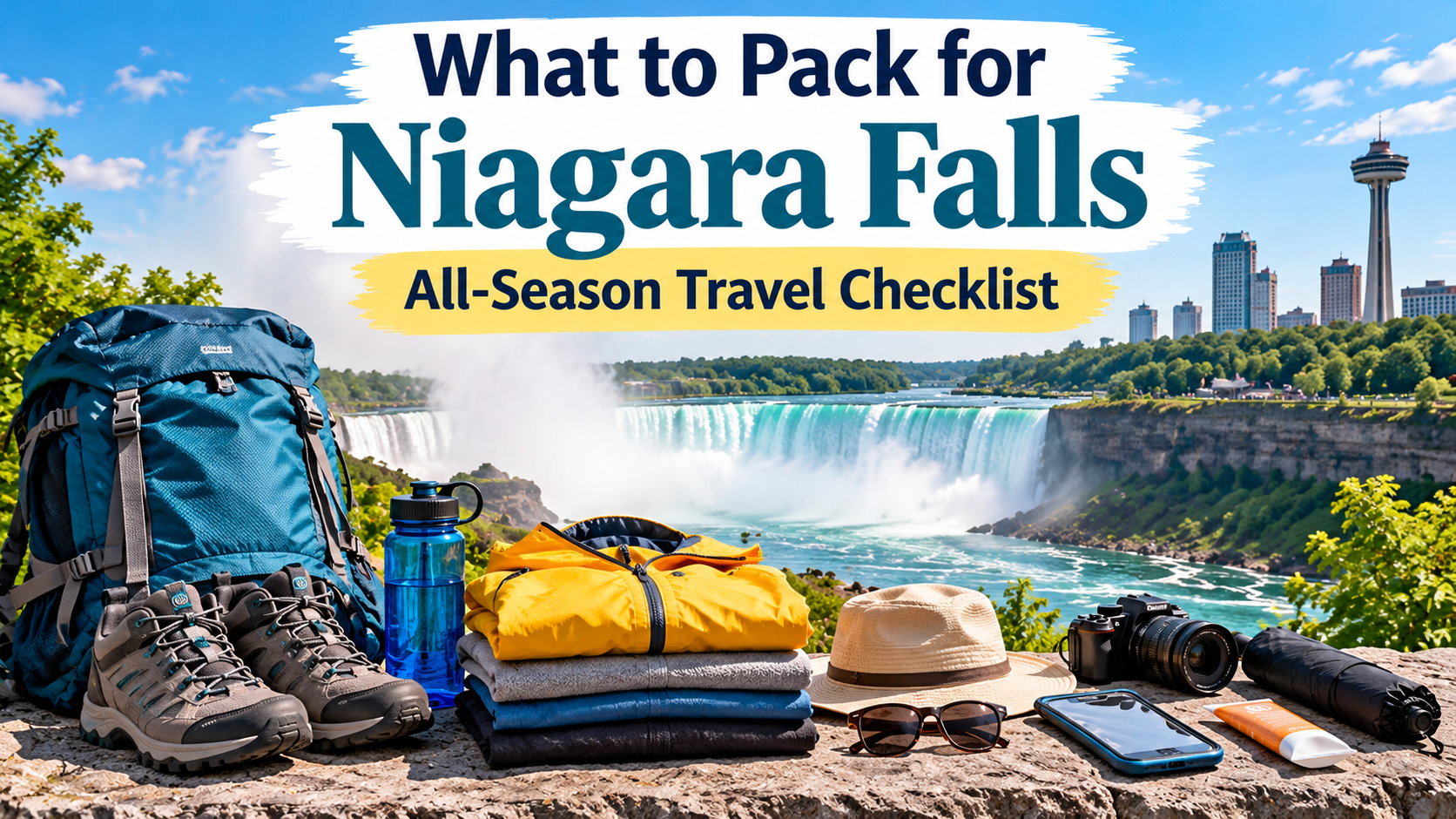
Planning a trip to Niagara Falls? Whether you’re visiting during the warm summer months, enjoying the colorful autumn scenery, exploring the waterfalls in spring, or experiencing the frozen beauty of winter, packing the right items can make a huge difference in your trip.
Knowing what to pack for Niagara Falls is especially important because the weather can change quickly, and the powerful waterfalls create mist that can leave visitors surprisingly wet.
From waterproof jackets and comfortable walking shoes to winter coats and summer essentials, your packing list should reflect the season, activities, and attractions you plan to experience.
Niagara Falls is also a destination where you’ll likely spend considerable time outdoors. Scenic walking paths, observation areas, boat tours, and nearby parks all require practical clothing and accessories.
The good news? You don’t need to bring an enormous suitcase.
With a little preparation, you can pack efficiently while staying comfortable in almost any weather.
This complete Niagara Falls packing guide covers everything you need for spring, summer, fall, and winter, along with essential items for boat tours, families, photographers, and travelers crossing between Canada and the United States.
Quick Niagara Falls Packing Checklist
If you’re short on time, start with this essential packing list.
Clothing Essentials
-
Comfortable walking shoes with good traction
-
Waterproof or water-resistant jacket
-
Lightweight shirts and tops
-
Comfortable pants or shorts appropriate for the season
-
Sweater, fleece, or light jacket for layering
-
Extra socks
-
Sleepwear and underwear
-
Seasonal outerwear
-
Hat or cap
Travel Accessories
-
Small daypack
-
Reusable water bottle
-
Sunglasses
-
Sunscreen
-
Lip balm
-
Portable phone charger
-
Waterproof phone pouch
-
Camera or smartphone
-
Compact umbrella
-
Small first-aid kit
Important Documents
-
Passport or other acceptable border-crossing documents, if applicable
-
Hotel reservation confirmations
-
Attraction tickets
-
Travel insurance information
-
Driver’s license, if driving
-
Credit or debit cards
-
Emergency contact information
-
Any required travel authorizations
Quick Tip: Even on sunny days, carry a lightweight waterproof layer. The mist near Niagara Falls can make clothing damp, especially when visiting observation areas close to the waterfalls.
1. What to Pack for Niagara Falls in Spring (March–May)
Spring is a beautiful time to visit Niagara Falls. The surrounding parks gradually turn green, flowers begin blooming, and the waterfalls create impressive scenery.
However, spring weather can be unpredictable.
March can still feel like winter, while May may bring pleasantly warm afternoons. Rain, wind, and chilly mornings are common throughout the season.
The key to comfortable spring sightseeing is layering.
Essential Spring Clothing
Pack a combination of lightweight and warmer clothing that you can adjust throughout the day.
Recommended items include:
- A waterproof rain jacket
- Lightweight sweaters or fleece jackets
- Long-sleeved shirts
- Comfortable jeans or travel pants
- Water-resistant walking shoes
- Warm socks
- A compact umbrella
- A light scarf
- A hat for cooler mornings
A breathable waterproof jacket is particularly useful because it protects you from both rain and waterfall mist.
Avoid relying exclusively on heavy cotton clothing, which can remain damp for a long time.
Spring Packing Tips
If you’re visiting in March or early April, bring a warmer coat and consider gloves.
Late April and May usually allow lighter layers, although temperatures can still fluctuate.
Waterproof footwear is helpful when walking through wet parks or along misty viewing areas.
Check the forecast shortly before departure rather than assuming spring weather will be mild.
Best Packing Strategy: Dress in layers that are easy to remove or add as temperatures change.
2. What to Pack for Niagara Falls in Summer (June–August)
Summer is one of the most popular times to visit Niagara Falls.
Longer daylight hours, warm weather, and seasonal attractions make it an excellent period for sightseeing.
However, summer can also bring humidity, strong sunshine, occasional thunderstorms, and crowded attractions.
You’ll want clothing that keeps you cool while still providing protection from the mist.
Essential Summer Clothing
Your summer Niagara Falls packing list should include:
- Lightweight T-shirts
- Breathable shorts
- Comfortable summer dresses or casual outfits
- Moisture-wicking clothing
- Lightweight pants
- Comfortable walking shoes
- Sandals with secure straps
- Sunglasses
- Wide-brimmed hat or baseball cap
- Light rain jacket
- Extra socks
Choose breathable fabrics that dry relatively quickly.
Although the weather may be warm, you can still become wet near the falls, especially during boat excursions.
Sun Protection Essentials
Many visitors underestimate how much time they’ll spend outside.
Pack broad-spectrum sunscreen with SPF 30 or higher, sunglasses with UV protection, and a hat.
A refillable water bottle is also essential for staying hydrated during long sightseeing days.
If you’re traveling with children, bring additional water and sun protection.
What About Swimming Gear?
Niagara Falls itself is not a swimming destination. Swimming near the waterfalls and in restricted river areas is extremely dangerous and prohibited.
However, a swimsuit may be useful if your hotel has a swimming pool or if you’re visiting an appropriate nearby recreational facility.
Summer Packing Tip: Carry an extra lightweight shirt or socks if you plan to participate in mist-heavy attractions.
3. What to Pack for Niagara Falls in Fall (September–November)
Autumn transforms Niagara Falls into a beautiful landscape of colorful trees, crisp air, and scenic walking routes.
September can still feel like summer, but October and November become progressively cooler.
Fall is an excellent season for travelers who enjoy photography, nature walks, and sightseeing without peak summer crowds.
However, changing temperatures require thoughtful packing.
Essential Fall Clothing
Bring:
- Medium-weight jacket
- Waterproof outer layer
- Sweaters or fleece tops
- Long-sleeved shirts
- Comfortable pants
- Warm socks
- Closed-toe walking shoes
- Light gloves for late fall
- Scarf
- Warm hat for November visits
Layering remains important because daytime temperatures may differ significantly from morning and evening conditions.
Fall Photography Essentials
Niagara Falls is particularly photogenic during autumn.
If photography is a priority, consider packing:
- Camera or smartphone with sufficient storage
- Portable battery pack
- Lens-cleaning cloth
- Waterproof camera protection
- Small tripod where permitted
Waterfall mist can collect on camera lenses, so a microfiber cloth is extremely useful.
Fall Packing Tips
September visitors may need only a light jacket, while November travelers should prepare for near-freezing temperatures.
A wind-resistant outer layer can improve comfort near exposed viewpoints.
Best Packing Strategy: Bring versatile clothing suitable for both mild afternoons and cold evenings.
4. What to Pack for Niagara Falls in Winter (December–February)
Winter offers one of Niagara Falls’ most dramatic experiences.
Snow-covered landscapes, icy formations, and illuminated waterfalls create a memorable atmosphere.
Although the waterfalls do not normally freeze completely, ice can accumulate around the surrounding structures and riverbanks.
Winter conditions can also be challenging.
Cold temperatures, wind, snow, and slippery walkways make appropriate clothing essential.
Essential Winter Clothing
Your winter Niagara Falls packing list should include:
- Insulated winter coat
- Thermal base layers
- Warm sweaters or fleece jackets
- Insulated pants or thermal leggings
- Waterproof winter boots
- Thick wool or thermal socks
- Insulated gloves or mittens
- Warm winter hat
- Scarf or neck gaiter
- Moisture-wicking underwear
Waterproof, insulated boots with good traction are among the most important items.
Snow and ice can make outdoor walking uncomfortable or hazardous without suitable footwear.
Why Layering Matters in Winter
The most effective winter clothing system includes three layers.
Base Layer: Moisture-wicking thermal clothing that helps keep your skin dry.
Middle Layer: Fleece, wool, or insulated clothing that provides warmth.
Outer Layer: A wind-resistant and waterproof coat that protects against snow, rain, and cold air.
This system allows you to adjust your clothing when moving between outdoor attractions and heated buildings.
Winter Accessories You Shouldn’t Forget
Cold temperatures can reduce phone battery performance, so keep your phone protected and carry a charged power bank.
Lip balm and moisturizer are useful because winter air can be drying.
Hand warmers may also help during extended outdoor sightseeing.
Important: Some attractions, including seasonal boat tours, do not operate throughout winter. Always check current operating schedules before traveling.
5. What to Wear on a Niagara Falls Boat Tour
A boat tour is one of Niagara Falls’ most memorable experiences.
On the American side, Maid of the Mist offers visitors the opportunity to experience the waterfalls from the Niagara River.
On the Canadian side, Niagara City Cruises operates sightseeing experiences that bring passengers close to the falls.
These excursions provide spectacular views, but you should expect significant mist and spray.
What to Wear
Recommended clothing includes:
- Quick-drying shirt
- Lightweight waterproof jacket
- Comfortable pants or shorts
- Secure walking shoes
- Water-resistant footwear
- Minimal loose accessories
- Waterproof phone protection
Boat operators generally provide protective ponchos on standard daytime waterfall cruises, but you should verify the arrangements for your specific excursion.
Even with a poncho, shoes, socks, and exposed clothing can become wet.
Protect Your Electronics
A waterproof phone pouch can be extremely helpful.
If you’re bringing a camera, use appropriate weather protection and avoid exposing equipment to heavy spray.
Secure glasses, hats, and other loose accessories before approaching the waterfalls.
Should You Bring a Change of Clothes?
For most visitors, a complete change of clothes is unnecessary.
However, bringing dry socks or a spare shirt can improve comfort, particularly if you’re visiting during cooler weather.
Boat Tour Tip: Wear clothing that dries quickly and avoid carrying unnecessary valuables.
6. Best Shoes for Visiting Niagara Falls
Choosing the right footwear can significantly affect your experience.
Niagara Falls involves more walking than many visitors expect.
You may spend hours exploring observation platforms, waterfront promenades, parks, and nearby attractions.
Comfortable Walking Shoes
Supportive walking shoes are the best choice for general sightseeing.
Look for:
- Good arch support
- Cushioned soles
- Reliable traction
- Breathable materials
- Comfortable fit
Avoid wearing brand-new shoes for the first time during your trip.
Break them in beforehand to reduce the risk of blisters.
Waterproof Shoes
Waterproof or water-resistant footwear is particularly useful in spring, fall, and winter.
During boat tours, shoes may become wet even when you’re wearing a poncho.
Quick-drying footwear can be useful in summer, provided it offers secure footing.
Winter Boots
Winter visitors should prioritize insulated, waterproof boots with slip-resistant soles.
Ordinary sneakers may not provide enough traction on icy surfaces.
For severe winter conditions, consider appropriate traction aids where permitted.
Footwear Recommendation: Bring one reliable pair of walking shoes and add season-specific footwear if necessary.
7. Essential Travel Accessories for Niagara Falls
Beyond clothing, several small accessories can make sightseeing easier and more enjoyable.
Waterproof Phone Pouch
A waterproof phone pouch protects your smartphone from mist and splashes.
Choose one designed for your phone size and follow its instructions carefully.
Test the seal before relying on it around water.
Portable Power Bank
Between taking photos, navigating with maps, and checking attraction tickets, your phone battery may drain quickly.
A compact power bank can help keep your devices charged.
Small Daypack
A lightweight backpack is ideal for carrying:
- Water bottle
- Rain jacket
- Snacks
- Sunscreen
- Extra clothing layer
- Power bank
- Travel documents
Choose a comfortable bag that doesn’t become bulky during crowded sightseeing activities.
Reusable Water Bottle
Walking around Niagara Falls can be tiring, particularly during summer.
Carrying a refillable bottle helps you stay hydrated and reduces disposable plastic waste.
Sunglasses and Sunscreen
Sun protection is useful year-round.
Water, snow, and bright outdoor conditions can increase glare.
Microfiber Towel
A small quick-drying towel is helpful for wiping wet hands, glasses, phones, and other belongings after mist-heavy activities.
8. What to Pack for Niagara Falls With Kids
Traveling to Niagara Falls with children can be a wonderful family experience.
However, parents should prepare for changing weather, extended walking, and crowded attractions.
Family Packing Checklist
-
Comfortable children’s walking shoes
-
Weather-appropriate jackets
-
Spare socks and clothing
-
Sunscreen
-
Hats
-
Reusable water bottles
-
Snacks
-
Wet wipes and tissues
-
Small first-aid kit
-
Child-friendly entertainment
-
Stroller or baby carrier if appropriate
-
Necessary medications
Tips for Families
Children may become uncomfortable when their clothing gets wet near the waterfalls.
Pack an extra set of clothes for younger children, especially during cooler seasons.
If you’re visiting with a baby or toddler, consider a stroller suitable for outdoor paths.
Some attractions involve stairs, elevators, or limited stroller access, so check accessibility information in advance.
Always supervise children closely near water and observation barriers.
Family Tip: Schedule regular breaks and avoid planning too many attractions in a single day.
9. What to Pack When Crossing the US–Canada Border
Niagara Falls is unusual because visitors can experience the waterfalls from both the United States and Canada.
The American side is located in Niagara Falls, New York, while the Canadian side is in Niagara Falls, Ontario.
Many travelers choose to explore both sides during the same trip.
If you plan to cross the international border, travel documents are especially important.
Essential Border-Crossing Documents
Depending on your citizenship, age, travel method, and immigration status, you may need:
- Valid passport
- Passport card or another accepted document for eligible land crossings
- Appropriate visa or travel authorization
- Documentation for children
- Vehicle registration and insurance documents if driving
A US passport card is generally valid for eligible land and sea crossings between the United States and Canada, but it cannot be used for international air travel.
Entry requirements differ depending on nationality and circumstances.
Check official Canadian and US government guidance before departure.
Important Border Tips
Do not assume that being able to enter one country automatically means you can enter the other.
Travelers should also check rules for returning to their country of residence.
If you’re traveling with children who are not accompanied by both parents or legal guardians, additional documentation may be recommended.
Currency and Payments
The United States uses US dollars, while Canada uses Canadian dollars.
Credit and debit cards are widely accepted, but check whether your bank charges foreign transaction fees.
You may also want a small amount of local currency for incidental expenses.
Travel Tip: Keep your passport and other important documents in a secure, accessible place rather than buried in your luggage.
10. What Not to Pack for Niagara Falls
Packing efficiently is just as important as remembering the essentials.
Avoid bringing items that add unnecessary weight or inconvenience.
Heavy, Uncomfortable Shoes
You’ll likely walk several miles during a full sightseeing day.
Avoid footwear that causes discomfort or lacks traction.
Too Many Formal Outfits
Niagara Falls is primarily a casual sightseeing destination.
Unless you have reservations at upscale restaurants or special events, comfortable clothing will be more useful than multiple formal outfits.
Excessive Valuables
Avoid carrying expensive jewelry or unnecessary electronics near mist-heavy attractions.
Bulky Bags
Large backpacks can become inconvenient in crowded spaces.
A compact daypack is usually sufficient.
Clothing That Takes Too Long to Dry
Heavy denim and certain cotton garments can remain damp after exposure to mist.
Quick-drying fabrics are generally more practical for waterfall activities.
11. How to Pack Light for a Niagara Falls Weekend
A two- or three-day trip to Niagara Falls usually doesn’t require a large suitcase.
With a thoughtful packing strategy, many travelers can manage with a carry-on bag.
Sample Three-Day Packing List
- Three casual tops
- Two pairs of pants or shorts
- One sweater or fleece
- One waterproof jacket
- One pair of comfortable walking shoes
- Three sets of underwear
- Three pairs of socks
- Sleepwear
- Seasonal accessories
- Toiletries
- Phone charger
- Small daypack
Adjust this list for winter, when bulkier clothing and additional thermal layers may be necessary.
Choose Versatile Clothing
Neutral-colored clothing that can be mixed and matched makes packing easier.
For example, one pair of comfortable travel pants can work for sightseeing, casual dining, and evening walks.
Use Packing Cubes
Packing cubes help organize clothing and make it easier to locate items.
They can be especially useful when traveling with family members or sharing luggage.
Check Your Hotel Amenities
Before packing items such as a hair dryer, towels, or toiletries, check what your accommodation provides.
This can reduce unnecessary luggage.
12. Additional Packing Tips for Niagara Falls Photography
Niagara Falls is one of North America’s most photogenic natural attractions.
Whether you’re using a smartphone or a dedicated camera, a little preparation can help protect your equipment and improve your photographs.
Protect Your Camera From Mist
Water droplets can accumulate quickly on camera lenses.
Carry a microfiber cloth and keep equipment protected when you’re not actively taking photographs.
Avoid changing camera lenses in heavy spray.
Bring Extra Battery Power
Cold weather can reduce battery performance, particularly during winter.
Carry a spare battery if your camera supports removable batteries.
Plan for Different Lighting Conditions
Morning and evening light can create beautiful waterfall photographs.
A compact tripod may be helpful for certain shots, but always follow attraction-specific rules and avoid obstructing pathways.
Keep Your Gear Organized
A weather-resistant camera bag provides useful protection from light rain and splashes.
For heavy waterfall spray, consider a properly rated waterproof cover.
13. Travel Insurance and Other Important Preparations
Travel insurance may be worth considering when planning a Niagara Falls vacation, particularly if you’re traveling internationally or booking nonrefundable accommodations.
Depending on the policy, travel insurance may provide benefits for covered trip cancellations, interruptions, medical emergencies, or baggage issues.
Coverage varies substantially between plans.
Travelers should review exclusions, benefit limits, deductibles, and eligibility requirements before purchasing.
If you’re crossing the US–Canada border, verify whether your existing health insurance provides coverage in the destination country.
Don’t assume that ordinary domestic medical coverage automatically extends across the border.
Other Preparations Before Departure
Before leaving home:
- Check the weather forecast.
- Confirm attraction operating schedules.
- Review border entry requirements if applicable.
- Download offline maps.
- Save accommodation confirmations.
- Charge electronic devices.
- Pack essential medications in accessible luggage.
- Confirm any accessibility requirements.
A little preparation can prevent unnecessary stress once you arrive.
14. Frequently Asked Questions About What to Pack for Niagara Falls
Do You Need a Raincoat at Niagara Falls?
A raincoat is highly recommended, especially if you’re visiting viewpoints close to the waterfalls or participating in a boat tour.
The powerful mist can make clothing wet even when the weather is sunny.
A lightweight waterproof jacket is useful during most seasons.
Can You Wear Sneakers to Niagara Falls?
Yes. Comfortable sneakers are suitable for general sightseeing, particularly during dry weather.
However, waterproof or water-resistant shoes are preferable during wet conditions, and insulated boots are recommended during winter.
Do You Get Wet at Niagara Falls?
You can get wet at Niagara Falls, especially during boat tours and at observation areas exposed to heavy mist.
How wet you become depends on the attraction, wind direction, and weather conditions.
What Should I Wear on Maid of the Mist?
Wear comfortable clothing, secure shoes, and items that can tolerate water exposure.
Protect your phone and camera with appropriate waterproof accessories.
Standard boat tours generally provide protective ponchos, but verify current arrangements with the operator.
Is Niagara Falls Cold in Summer?
Summer is generally warm, but mornings, evenings, windy conditions, and heavy waterfall mist can feel cooler.
A lightweight jacket is useful even during warmer months.
What Should I Pack for Niagara Falls in October?
Pack long-sleeved shirts, sweaters, comfortable pants, a medium-weight jacket, waterproof outerwear, and supportive walking shoes.
Temperatures can vary considerably throughout October.
Do I Need a Passport to Visit Niagara Falls?
You don’t need a passport simply to visit Niagara Falls on the side of the border where you’re already legally present.
However, crossing between the United States and Canada requires appropriate travel documents, which depend on your citizenship and circumstances.
What Should I Bring for a One-Day Niagara Falls Trip?
For a day trip, bring comfortable walking shoes, a waterproof jacket, water, sunscreen, a portable charger, a phone pouch, and any required identification or travel documents.
A small daypack should be sufficient for most visitors.
Can I Visit Niagara Falls in Winter?
Yes. Niagara Falls is open to visitors year-round, although some attractions operate seasonally.
Winter visitors should pack warm clothing, waterproof boots, gloves, and insulated outerwear.
What Is the Most Important Thing to Pack for Niagara Falls?
Comfortable footwear and a waterproof outer layer are among the most useful items.
Together, they help you stay comfortable while walking and exploring misty viewing areas.
Final Thoughts: Pack Smart and Enjoy Niagara Falls in Every Season
Knowing what to pack for Niagara Falls can make your trip more comfortable, enjoyable, and stress-free.
The most important packing decisions depend on when you’re visiting and what activities you plan to experience.
Summer travelers should focus on breathable clothing, sun protection, and lightweight waterproof gear.
Spring and fall visitors should prepare for changing temperatures with versatile layers.
Winter travelers need insulated clothing, waterproof boots, and accessories designed for cold weather.
Regardless of the season, comfortable walking shoes, a waterproof jacket, a reusable water bottle, and protection for your electronics are excellent essentials.
If you’re planning to explore both the Canadian and American sides, remember to check border-crossing requirements and bring the appropriate documents.
With the right packing list, you’ll be ready to enjoy the spectacular waterfalls, scenic trails, boat tours, and memorable experiences that make Niagara Falls such a popular destination.
Ready to plan your Niagara Falls adventure? Compare accommodations, explore sightseeing experiences, and prepare for an unforgettable visit to one of North America’s most spectacular natural attractions.
Related Posts: