
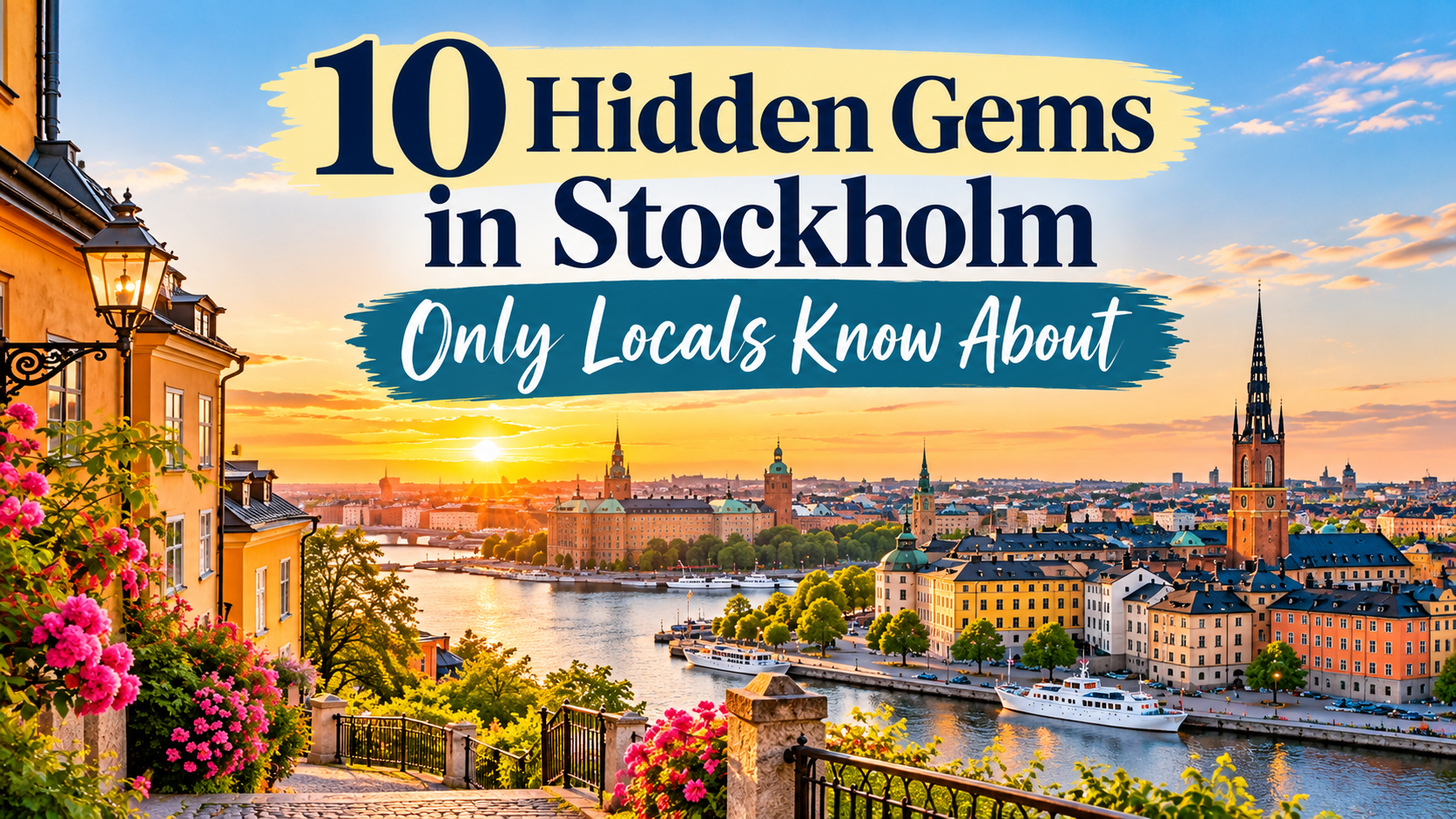
Stockholm is famous for its colorful Old Town, royal palaces, world-class museums, and beautiful waterfront. But beyond the familiar attractions lies another side of Sweden’s capital—one filled with secret gardens, peaceful islands, charming neighborhoods, unusual cultural spaces, and spectacular viewpoints.
If you’re looking for hidden gems in Stockholm, you’ve come to the right place.
While most visitors spend their time exploring Gamla Stan, visiting the Vasa Museum, or photographing the Royal Palace, there are countless lesser-known places where you can experience the city’s authentic character.
Imagine wandering through a peaceful forest just minutes from the subway, enjoying coffee beside a historic industrial building, or discovering colorful garden cottages tucked into a hillside.
These are the kinds of experiences that make Stockholm unforgettable.
Some of these destinations are well-loved by Stockholm residents, while others remain overlooked by many international visitors. They’re not all literally secret, but they offer a rewarding alternative to the usual tourist itinerary.
In this guide, we’ll explore 10 remarkable places that reveal a quieter, more personal side of Stockholm. You’ll discover where to go, what makes each destination special, when to visit, and how to experience the city beyond its famous landmarks.
Whether you’re visiting Stockholm for a weekend or planning a longer Swedish adventure, these hidden treasures deserve a place on your itinerary.
Quick Guide: 10 Hidden Gems in Stockholm
| Hidden Gem | Best For | Area |
|---|---|---|
| Skinnarviksberget | Sunset views and photography | Södermalm |
| Rosendals Trädgård | Gardens and Swedish fika | Djurgården |
| Långholmen Island | Swimming and peaceful walks | Central Stockholm |
| Skogskyrkogården | Architecture and history | Enskede |
| Tantolunden | Local life and garden cottages | Södermalm |
| Vinterviken | Waterfront scenery and industrial heritage | Gröndal/Aspudden |
| Judarskogen | Forest walks and nature | Bromma |
| Färgfabriken | Contemporary art and culture | Lövholmen |
| Stora Blecktornsparken | Family-friendly neighborhood life | Södermalm |
| Ivar Los Park | Scenic views and quiet relaxation | Södermalm |
1. Skinnarviksberget – Stockholm’s Spectacular Hilltop Viewpoint
One of Stockholm’s most rewarding experiences doesn’t require an expensive attraction ticket or a guided tour. Sometimes, all you need is a comfortable pair of shoes and a short walk uphill.
Skinnarviksberget is a rocky hilltop on Södermalm that offers breathtaking views across Stockholm’s waterways and historic skyline.
Although the viewpoint is popular with residents, many first-time visitors never make it here.
From the top, you’ll see the waters of Riddarfjärden stretching toward the city center, with Stockholm City Hall and other recognizable landmarks rising above the rooftops.
The atmosphere is particularly magical during sunset, when golden light reflects off the water and the city slowly begins to illuminate.
Why This Place Is Special
Unlike observation towers or crowded sightseeing platforms, Skinnarviksberget feels natural and informal.
There are no elaborate visitor facilities or ticket counters. Instead, you’ll find broad rocky surfaces where people gather with friends, share snacks, and admire the scenery.
On warm summer evenings, the hillside becomes a relaxed meeting place.
You might see couples enjoying a romantic picnic, photographers setting up their cameras, or groups of friends talking as the sun disappears behind the horizon.
It’s a wonderful introduction to Stockholm’s outdoor lifestyle.
What to Do at Skinnarviksberget
Bring a small picnic, find a comfortable place on the rocks, and enjoy the panoramic scenery.
Photography enthusiasts should arrive before sunset to capture the changing light.
If you prefer a quieter experience, visit early in the morning when the area is generally less busy.
Afterward, explore the surrounding streets of Södermalm, where independent cafés, vintage stores, and charming residential buildings create a distinctive neighborhood atmosphere.
Local Tip: The rocks can become slippery after rain or during winter. Wear shoes with good grip and avoid exposed edges.
Best Time to Visit: Late afternoon or sunset during spring, summer, and early autumn.
Getting There: Take the metro to Zinkensdamm and walk toward the Skinnarviksberget viewpoint.
2. Rosendals Trädgård – A Secret Garden Escape on Djurgården
Stockholm’s Djurgården island is famous for major attractions such as the Vasa Museum and Skansen.
However, venture beyond the busiest museum areas and you’ll discover one of the city’s loveliest green retreats: Rosendals Trädgård.
This beautiful garden combines sustainable horticulture, seasonal food, flower gardens, orchards, and a welcoming café.
The atmosphere feels remarkably peaceful considering its location within the capital.
Rosendals Trädgård is especially appealing to travelers who enjoy slow travel, nature, and authentic Swedish food experiences.
Discover Stockholm’s Garden Culture
Rosendals Trädgård is more than an ornamental garden.
It is a working biodynamic garden where vegetables, herbs, flowers, and fruit are cultivated using environmentally conscious methods.
Visitors can explore different growing areas, admire seasonal plants, and appreciate the relationship between gardening and Swedish food culture.
Depending on the season, the gardens may feature colorful flowers, lush greenery, or fruit trees.
The surroundings provide excellent opportunities for relaxed photography.
One of the most enjoyable experiences is simply sitting outdoors and appreciating the atmosphere.
Experience Traditional Swedish Fika
No visit to Stockholm is complete without experiencing fika, the Swedish tradition of taking a coffee break and enjoying something sweet.
Rosendals offers a particularly memorable setting for this custom.
Its café serves seasonal food, pastries, and baked goods, with an emphasis on organic and biodynamic ingredients.
Imagine enjoying a freshly baked cinnamon bun while sitting beneath apple trees.
It’s a simple experience, but one that captures an important part of Swedish culture.
Practical Visiting Tips
Plan enough time to explore the garden without rushing.
The setting is particularly beautiful from late spring through early autumn, although the experience changes throughout the year.
Check the garden’s official website for seasonal opening hours, café availability, and special events.
Local Tip: Combine your visit with a walk through Djurgården’s quieter woodland paths rather than returning immediately to the museum district.
Best Time to Visit: Late spring through early autumn.
Getting There: Walk or cycle from Djurgårdsbron, following signs toward Rosendals Trädgård.
3. Långholmen Island – A Peaceful Island With a Fascinating Past
Stockholm is built across islands, but some of its most charming waterfront destinations are surprisingly easy to overlook.
Långholmen is one of them.
Located between Södermalm and Kungsholmen, this green island offers a refreshing escape from the city’s busy streets.
Today, it’s a favorite destination for swimming, picnicking, walking, and relaxing beside the water.
But Långholmen has a fascinating history.
For generations, the island was associated with imprisonment rather than recreation.
Its former prison has since been transformed into accommodation, and the island now welcomes visitors looking for a distinctive place to explore.
Explore the Island’s Unusual History
Långholmen’s former prison operated until 1974.
Today, the historic prison complex has been repurposed, and visitors can learn about the island’s past through its preserved buildings and museum-related experiences.
The contrast between its former purpose and present-day atmosphere makes Långholmen particularly interesting.
Walking around the island, you’ll encounter historic architecture, leafy paths, and unexpected views across the water.
The island also has connections to Stockholm’s maritime heritage, including an old shipyard.
Enjoy a Summer Swimming Spot
During warmer months, Långholmen becomes a popular place for swimming.
Its small beaches and waterfront access provide an alternative to crowded city attractions.
Visitors can enjoy the sunshine, relax on the grass, or take a refreshing dip where swimming is permitted and conditions are safe.
The island’s relatively compact size also makes it ideal for leisurely exploration.
You don’t need a detailed itinerary. Simply follow the paths and discover the scenery.
A Romantic Stockholm Escape
Långholmen is particularly appealing for couples seeking peaceful experiences without traveling far from the city center.
Pack a picnic, find a quiet waterfront spot, and enjoy the passing boats.
In the evening, the changing light creates a beautiful atmosphere along the shore.
Local Tip: Visit on a weekday morning for a calmer experience, especially during the summer swimming season.
Best Time to Visit: May through September for outdoor activities, although the island is worth exploring year-round.
Getting There: Walk from Hornstull metro station across the bridges connecting the island to Södermalm.
4. Skogskyrkogården – A UNESCO World Heritage Site Hidden in the Forest
Some of Stockholm’s most remarkable destinations are not traditional tourist attractions.
Skogskyrkogården, also known as the Woodland Cemetery, is an extraordinary example.
Located south of the city center, this UNESCO World Heritage Site combines architecture, landscape design, and natural beauty.
Designed by Swedish architects Gunnar Asplund and Sigurd Lewerentz, the cemetery is internationally recognized for its thoughtful relationship between buildings and the surrounding environment.
Rather than dominating the landscape, the architecture works harmoniously with the forest.
A Different Kind of Cultural Experience
Visitors enter a peaceful landscape of tall trees, winding paths, open lawns, and carefully positioned buildings.
The design encourages quiet reflection.
As you walk through the grounds, you’ll notice how natural elements are used to create a sense of calm.
The changing seasons dramatically transform the atmosphere.
In spring, fresh greenery appears among the trees.
Summer brings soft light filtering through the forest.
Autumn is especially beautiful, with golden leaves contrasting against dark tree trunks.
Winter offers a more minimalist landscape, sometimes covered in snow.
Discover Extraordinary Swedish Architecture
The cemetery’s chapels and landscaped spaces demonstrate the principles of modern Scandinavian architecture.
The architects carefully considered how visitors would move through the landscape and experience the surrounding environment.
The result is a place that feels both monumental and deeply personal.
Architecture enthusiasts will appreciate the balance between simple forms, natural materials, and carefully planned views.
Photographers can also find striking compositions, although respectful behavior is essential.
Visiting Respectfully
Skogskyrkogården remains an active cemetery.
Visitors should remain quiet near funerals, avoid photographing mourners, and respect graves and ceremonies.
Chapel interiors are not generally open for casual visits, although guided tours may provide access at scheduled times.
Local Tip: Allow at least 60–90 minutes to explore the main paths and appreciate the landscape.
Best Time to Visit: Year-round, particularly autumn.
Getting There: Take the green metro line to Skogskyrkogården station.
5. Tantolunden – Colorful Garden Cottages and Authentic Local Life
If you want to see how Stockholm residents enjoy their city, head to Tantolunden.
Located on Södermalm, this large park is a lively neighborhood gathering place with green hills, walking paths, waterfront recreation, and one particularly charming feature: its allotment gardens.
These gardens contain small cottages surrounded by flowers, vegetables, and carefully maintained plots.
The result is a colorful landscape that feels more like a countryside village than a capital city neighborhood.
Explore Stockholm’s Allotment Garden Tradition
Allotment gardens are an important part of Swedish urban culture.
They give residents opportunities to grow plants, cultivate vegetables, and enjoy outdoor spaces within the city.
Tantolunden’s garden community dates back to 1915.
Today, numerous garden plots and small cottages contribute to the park’s distinctive character.
During summer, the gardens become particularly attractive.
Flower beds bloom, greenery surrounds the cottages, and the hillside transforms into a picturesque patchwork of colors.
Visitors can admire the gardens from public paths.
However, remember that individual plots are private spaces and should not be entered without permission.
Experience Stockholm Like a Resident
Tantolunden is not simply a sightseeing destination.
It’s a place where people exercise, meet friends, walk their dogs, relax in the sunshine, and spend time with family.
During summer, the nearby waterfront attracts swimmers and sunbathers.
The park also offers recreational facilities and open spaces suitable for different ages.
Unlike major tourist attractions, Tantolunden provides an opportunity to observe everyday Stockholm life.
Bring a book, purchase a takeaway coffee, and spend an hour relaxing on the grass.
Combine Nature With Neighborhood Exploration
After exploring the park, continue toward Hornstull.
This part of Södermalm is known for its relaxed atmosphere, independent businesses, and varied dining options.
Depending on the season, you may encounter outdoor markets or community events.
Local Tip: Visit in late spring or summer when the allotment gardens are at their most colorful.
Best Time to Visit: May through September.
Getting There: Take the metro to Zinkensdamm or Hornstull and walk into the park.
6. Vinterviken – A Waterfront Retreat With an Industrial Past
Stockholm has a fascinating ability to transform former industrial areas into beautiful public spaces.
Vinterviken is one of the best examples.
Situated southwest of central Stockholm, between Aspudden and Gröndal, this peaceful waterfront destination combines green landscapes, walking trails, historic buildings, and relaxed outdoor recreation.
What makes Vinterviken especially interesting is its connection to Alfred Nobel, the Swedish inventor whose name became associated with the Nobel Prizes.
During the nineteenth century, the area was used for industrial production, including explosives manufacturing.
Today, parts of the former industrial landscape have been transformed into places where residents gather to enjoy nature, food, and cultural activities.
Discover the History of Alfred Nobel
One of Vinterviken’s most distinctive buildings is the former dynamite factory associated with Nobel’s industrial operations.
The historic structure now serves as a venue for food, events, and gatherings.
Its architecture provides a fascinating contrast to the surrounding greenery.
Exploring the area reveals how Stockholm has adapted parts of its industrial heritage for modern community use.
Instead of demolishing every trace of the past, the city has preserved elements that tell the story of its development.
For travelers interested in history, this adds another dimension to what might otherwise seem like a pleasant waterfront park.
Explore the Gardens and Shoreline
Vinterviken is also home to a community garden where seasonal plants, flowers, and food cultivation contribute to the neighborhood’s atmosphere.
The surrounding parkland offers walking paths, picnic areas, and views across Lake Mälaren.
During summer, residents come here to relax beside the water, enjoy outdoor meals, and spend time with friends.
You can easily spend several hours wandering through the area.
Start with a shoreline walk, explore the gardens, and finish with a café stop if one is open.
Why Vinterviken Is Worth Visiting
Vinterviken offers something that many major attractions cannot: the chance to experience Stockholm at a slower pace.
There is no pressure to rush between exhibits or follow a strict sightseeing schedule.
The destination is particularly appealing for couples, solo travelers, and visitors who enjoy discovering places with a mixture of nature and history.
Local Tip: Combine Vinterviken with a walk around nearby Lake Trekanten for a longer outdoor excursion. Stay on marked paths and designated recreation areas.
Best Time to Visit: Late spring through early autumn.
Getting There: Take the metro to Aspudden and continue on foot toward Vinterviken.
7. Judarskogen – A Hidden Forest Just Outside the City Center
One of Stockholm’s greatest advantages is how easily you can escape into nature.
You don’t need to rent a car or travel deep into the Swedish countryside to find peaceful woodland.
Judarskogen Nature Reserve, located in Bromma, offers an excellent example.
This protected natural area features forest trails, a quiet lake, wetlands, and open green spaces.
For travelers who enjoy hiking, birdwatching, or simply spending time outdoors, Judarskogen is one of the most rewarding hidden gems in Stockholm.
Experience the Swedish Outdoors
Sweden has a strong tradition of appreciating nature.
Outdoor recreation is an important part of everyday life, and Stockholm residents have access to numerous forests, parks, and nature reserves.
Judarskogen provides a wonderful introduction to this lifestyle.
The reserve’s trails lead through wooded landscapes where visitors can observe seasonal changes and enjoy a break from city noise.
Lake Judarn forms a scenic centerpiece.
The surrounding wetlands also support wildlife, including amphibians and birds.
Because this is a protected environment, visitors should remain on appropriate trails, avoid disturbing wildlife, and follow posted conservation rules.
Perfect for a Peaceful Nature Walk
Judarskogen is especially appealing if your Stockholm itinerary already includes several days of museums, restaurants, and historic attractions.
A walk through the reserve provides a refreshing change of pace.
During spring, fresh greenery and birdsong bring the forest to life.
Summer offers long daylight hours and lush vegetation.
Autumn transforms the landscape into a beautiful combination of yellow, orange, and red.
Even winter can be atmospheric, although paths may become icy.
You don’t need advanced hiking experience to enjoy the reserve, but comfortable walking shoes are recommended.
Enjoy Nature Without Leaving Stockholm
What makes Judarskogen special is its accessibility.
A short metro journey can transport you from busy urban streets to a landscape that feels remarkably secluded.
It’s an excellent reminder that Stockholm is as much a nature destination as a cultural capital.
Local Tip: Bring water and a small snack, as you should not depend on finding cafés or shops inside the reserve.
Best Time to Visit: Spring through autumn.
Getting There: Take the green metro line toward Åkeshov and walk to the reserve.
8. Färgfabriken – Contemporary Art in an Unexpected Industrial Setting
Stockholm’s creative culture extends far beyond its famous museums.
If you enjoy contemporary art, architecture, and unusual cultural spaces, Färgfabriken deserves your attention.
Located in the Lövholmen area, this cultural institution occupies a historic industrial building.
Its name translates roughly to “paint factory,” reflecting the building’s industrial heritage.
Today, Färgfabriken is associated with contemporary art, architecture, design, and conversations about urban development.
Discover Stockholm’s Experimental Art Scene
Unlike traditional museums focused primarily on permanent collections, Färgfabriken is known for changing exhibitions and cultural programming.
Its activities may include contemporary art installations, architectural discussions, workshops, and public events.
This means the experience can vary significantly depending on when you visit.
One exhibition might explore the relationship between people and urban environments.
Another could focus on artistic experimentation or contemporary social themes.
For travelers interested in modern Scandinavian creativity, the venue offers a different perspective on Stockholm.
Architecture Worth Exploring
The industrial building is an important part of the experience.
High ceilings, historic structural elements, and large exhibition spaces create an atmosphere that differs from more conventional art galleries.
The setting also reflects Stockholm’s evolving relationship with its former industrial districts.
As neighborhoods change, cultural institutions like Färgfabriken help preserve connections to the city’s past while encouraging new creative ideas.
Make It Part of a Cultural Afternoon
Färgfabriken works particularly well as part of a broader exploration of Stockholm’s less touristy neighborhoods.
Check the current exhibition program before traveling, as access depends on scheduled activities and opening hours.
Allow time to appreciate both the artwork and the building itself.
Local Tip: Look for special exhibitions or public discussions that match your interests rather than assuming the same displays will always be available.
Best Time to Visit: Whenever a relevant exhibition is running.
Getting There: Travel toward Liljeholmen or Gröndal and continue by local transport or on foot, depending on your route.
9. Stora Blecktornsparken – A Charming Neighborhood Park Away From the Tourist Crowds
Not every hidden gem needs to be a dramatic viewpoint or famous historical landmark.
Sometimes, the most memorable travel experiences happen in ordinary neighborhoods.
Stora Blecktornsparken, located in southeastern Södermalm, is a good example.
This attractive neighborhood park is especially popular with local families.
It offers green spaces, play areas, and opportunities to experience Stockholm’s community-oriented outdoor culture.
A Different Side of Södermalm
Södermalm is often associated with trendy cafés, vintage boutiques, restaurants, and creative businesses.
However, its residential neighborhoods reveal a quieter side of the island.
Stora Blecktornsparken provides a welcome break from shopping streets and sightseeing routes.
Instead of crowds gathering around major landmarks, you’ll encounter residents enjoying everyday activities.
Families spend time at the playground, children explore the park, and people relax in the surrounding green areas.
The atmosphere feels informal and welcoming.
Why Families Will Love It
For visitors traveling with children, Stora Blecktornsparken can be particularly useful.
Long days of sightseeing are not always enjoyable for younger travelers.
A stop at a neighborhood playground gives children time to move around while adults enjoy a break.
The park’s play facilities and community setting make it more than a simple patch of grass.
Some activities and facilities may follow seasonal or staffed schedules, so check local information before visiting for a specific program.
Discover Everyday Stockholm
One of the best ways to understand a destination is to observe how its residents spend their free time.
At Stora Blecktornsparken, you’ll see a side of Stockholm that rarely appears in traditional travel brochures.
It’s an opportunity to experience the city’s family-friendly design, public green spaces, and relaxed neighborhood atmosphere.
The park is also a convenient stop while exploring the eastern side of Södermalm.
Local Tip: Pair your visit with a walk through nearby residential streets and a stop at a neighborhood bakery for Swedish fika.
Best Time to Visit: Spring through early autumn, especially for families.
Getting There: The park is near Katarina Bangata and can be reached on foot from the Skanstull area.
10. Ivar Los Park – A Peaceful Viewpoint Above Stockholm’s Historic Waterfront
Our final hidden gem brings us back to Södermalm, but this time to a smaller and more intimate viewpoint.
Ivar Los Park is located on Mariaberget, an elevated historic neighborhood overlooking Stockholm’s waterways.
The park is named after Swedish author Ivar Lo-Johansson, who lived and worked nearby.
Although the area is close to the well-known Monteliusvägen walking path, Ivar Los Park offers a distinctive atmosphere of its own.
Enjoy One of Stockholm’s Loveliest Views
From the park and surrounding viewpoints, visitors can admire the waterfront, historic buildings, and rooftops of central Stockholm.
The scenery is particularly beautiful during the softer light of morning and late afternoon.
The park also contains a playground with a traditional farm-inspired design, making it appealing to families.
For couples, the setting provides a pleasant place to pause during a romantic walk.
Unlike major attractions, the experience here is wonderfully simple.
You can sit, enjoy the scenery, and appreciate the city’s architecture without paying an entrance fee.
Explore Historic Mariaberget
One of the highlights of visiting Ivar Los Park is the surrounding neighborhood.
Mariaberget contains attractive historic buildings, narrow streets, and elevated pathways that offer glimpses of old Stockholm.
Walking through the area provides an opportunity to discover architectural details that are easy to miss when traveling by bus or metro.
The neighborhood’s intimate scale makes it ideal for slow exploration.
Instead of rushing between attractions, take time to appreciate the buildings, streets, and views.
Combine It With Monteliusvägen
If you have additional time, continue along nearby Monteliusvägen.
This approximately 500-meter-long pedestrian path offers sweeping views toward Stockholm City Hall, Riddarholmen, and Lake Mälaren.
The combination of Ivar Los Park and Monteliusvägen makes an excellent short walking excursion.
Local Tip: Visit early in the morning if you prefer quieter surroundings and soft photographic light.
Best Time to Visit: Spring through autumn, although the views are beautiful year-round.
Getting There: Walk from Mariatorget metro station toward Bastugatan and Mariaberget.
How to Explore Stockholm’s Hidden Gems Like a Local
Discovering Stockholm’s lesser-known attractions becomes much easier when you approach the city the way residents do.
Instead of relying exclusively on organized sightseeing tours, use public transportation, walk through residential neighborhoods, and leave room for spontaneous discoveries.
Use Stockholm’s Public Transportation System
Stockholm has an extensive public transportation network that includes metro trains, buses, trams, commuter trains, and certain ferries.
The system is operated under the SL network.
Most of the destinations in this guide can be reached using public transportation combined with walking.
Before your visit, check current ticket options and route information through the official SL public transportation website at https://sl.se/en.
Embrace the Swedish Tradition of Fika
Fika is much more than drinking coffee.
It’s a social tradition that encourages people to slow down, connect, and enjoy a break.
While exploring Stockholm, make time to stop at neighborhood cafés rather than eating every meal on the move.
Try a cinnamon bun, cardamom bun, or another Swedish pastry.
A simple coffee break can become one of the most memorable parts of your trip.
Explore Beyond the Historic Center
Gamla Stan is beautiful and deserves a visit, but Stockholm’s surrounding neighborhoods offer equally rewarding experiences.
Södermalm is particularly appealing for independent shops, local cafés, parks, and scenic walking routes.
Bromma offers accessible green spaces, while areas such as Aspudden and Gröndal provide opportunities to discover residential Stockholm.
The key is to balance famous attractions with slower neighborhood exploration.
Respect Local Spaces
Many of Stockholm’s hidden gems are public parks, residential neighborhoods, gardens, or places of reflection.
Be considerate of residents and other visitors.
Avoid entering private gardens, dispose of litter properly, and respect signs in protected natural areas.
At Skogskyrkogården, remember that the grounds are an active cemetery.
Responsible travel helps preserve the qualities that make these places special.
Best Time to Visit Stockholm’s Hidden Gems
Stockholm is a year-round destination, but the experience changes dramatically with the seasons.
Spring (March–May)
Parks begin turning green, flowers appear, and longer days make outdoor exploration increasingly enjoyable.
Late spring is especially good for gardens and neighborhood walks.
Summer (June–August)
Long daylight hours make this the ideal season for picnics, waterfront activities, outdoor cafés, and scenic viewpoints.
It’s also the busiest tourist season.
Autumn (September–November)
Golden foliage creates beautiful scenery at Skogskyrkogården and Judarskogen.
September and early October can be particularly rewarding for walking and photography.
Winter (December–February)
Stockholm becomes quieter and more atmospheric.
Enjoy winter walks, cozy cafés, and museums, but prepare for limited daylight, cold weather, and potentially icy paths.
Our Recommendation: May, June, and September offer an excellent balance of pleasant outdoor conditions, beautiful scenery, and opportunities to explore beyond Stockholm’s busiest attractions.
Suggested Two-Day Itinerary for Stockholm’s Hidden Gems
If you have limited time, you don’t need to visit all 10 destinations.
Instead, organize your sightseeing geographically.
Day 1: Discover Södermalm’s Local Treasures
Start your morning at Ivar Los Park and enjoy views over Stockholm’s historic waterfront.
Continue through Mariaberget before walking toward Skinnarviksberget.
Stop for fika at a neighborhood café, then spend the afternoon exploring Tantolunden’s colorful allotment gardens.
If you’re traveling with children, consider including Stora Blecktornsparken.
Finish your day with dinner in Södermalm.
Day 2: Gardens, History, and Waterfront Escapes
Begin at Rosendals Trädgård on Djurgården, enjoying the gardens and café.
Then choose an afternoon destination based on your interests.
For history and architecture, visit Skogskyrkogården.
For nature, head toward Judarskogen.
For a relaxed waterfront afternoon, explore Vinterviken or Långholmen.
These destinations are spread across the city, so choose one or two rather than trying to visit them all.
Frequently Asked Questions About Hidden Gems in Stockholm
What Are the Best Hidden Gems in Stockholm?
Some of the best hidden gems in Stockholm include Skinnarviksberget, Rosendals Trädgård, Långholmen Island, Skogskyrkogården, Tantolunden, and Judarskogen.
These destinations offer a mixture of nature, culture, history, and scenic viewpoints beyond the main tourist attractions.
Are There Free Hidden Gems in Stockholm?
Yes. Many of Stockholm’s best lesser-known attractions are free to explore.
Public parks, viewpoints, woodland trails, and waterfront areas generally do not require admission.
Museums, exhibitions, special events, and guided tours may charge fees.
Where Can I Experience Stockholm Like a Local?
Södermalm is an excellent starting point.
Explore neighborhood parks, independent cafés, local shopping streets, and waterfront walking routes.
Tantolunden, Stora Blecktornsparken, and Långholmen are particularly good places to experience everyday Stockholm life.
Is Stockholm Worth Visiting Beyond Gamla Stan?
Absolutely.
Although Gamla Stan is one of Stockholm’s most famous attractions, the surrounding islands and neighborhoods offer beautiful natural scenery, contemporary culture, historic architecture, and authentic local experiences.
How Many Days Do I Need to Explore Stockholm?
Three to four days is a good starting point for combining major attractions with several hidden gems.
Travelers who enjoy slower exploration may prefer five days or longer, especially if they want to visit the surrounding archipelago.
What Are the Most Romantic Hidden Gems in Stockholm?
Skinnarviksberget, Ivar Los Park, Rosendals Trädgård, and Långholmen are excellent choices for couples.
Their scenic views, peaceful gardens, and waterfront settings make them ideal for romantic walks and relaxed afternoons.
Final Thoughts: Discover the Stockholm Most Visitors Miss
Stockholm’s famous landmarks are undeniably impressive, but the city’s quieter corners often leave the strongest impressions.
A sunset from Skinnarviksberget, a leisurely fika at Rosendals Trädgård, a peaceful walk through Judarskogen, or an afternoon beside the water at Långholmen can reveal a more personal side of Sweden’s capital.
The beauty of exploring these hidden gems in Stockholm is that you don’t need an expensive itinerary or complicated travel arrangements.
Many are accessible by public transportation, and several are completely free to enjoy.
Whether you’re visiting for the first time or returning to discover something new, make time to wander beyond the familiar attractions.
You may find that your favorite Stockholm memory comes from a place you never expected to visit.
Ready to explore Sweden’s beautiful capital? Plan your trip, discover unique experiences, and find accommodations that put Stockholm’s best neighborhoods within easy reach.
Related Posts: